I had heard many things about Medellin before I arrived: it’s the best place to party in Colombia; the women are extremely beautiful; it’s home to notorious drug cartels and dealers; there are lots of fake boobs and bums; and until pretty recently (15 years ago), it was the most dangerous and violent city in the world. Medellin sounded pretty intense and I was intrigued to experience it first-hand. All of these things I had heard have elements of truth, but incorporating them into the whole picture of Medellin, and hearing the reasons behind them is really necessary to understand this dramatic place.
Naturally, drugs and partying go hand-in-hand so there’s one link. However hearing about the deadly history surrounding cocaine in Colombia and in particular, Medellin, it’s is sobering to think how the West’s demand for cocaine has cost this place so highly. So many lives lost or ruined, and a reputation which normal Colombians are struggling to shake off, when their only relation to drugs is that it has cost them the lives of people around them. The boobs and bums are explained by the super cheap plastic surgery available here, payable on credit. Tits for all! The women are inexplicably beautiful though, con o sin silicone. Unfortunately the men don’t quite live up to their siren counterparts. Men of Medellin, I hope you know how lucky you are! Medellin is now a relatively safe place, in a short space of time, through taking down the main drug dealers and pumping money into social development. Places which before were some of the deadliest in the world have been transformed into libraries, education centres, parks and open air galleries. To me this sends a beautiful message of hope and defiance against the killers who ravaged this city. The simple fact that there are now many travellers like me here shows that Medellin has overcome the worst and is now safe to be enjoyed by anyone. And back to partying, obviously drugs are not the only way to party here, in fact their use represents a small minority of partygoers, largely tourists. Colombians are passionate people who love music and dancing, and Medellin is no different. The diversity of parties available here though is notable compared to other cities, in Medellin I have partied at an electro festival in a field in the mountains, been to a German techno night and of course danced to salsa, merengue and plenty of reggaeton (possibly explaining why I am only just getting round to writing this post).
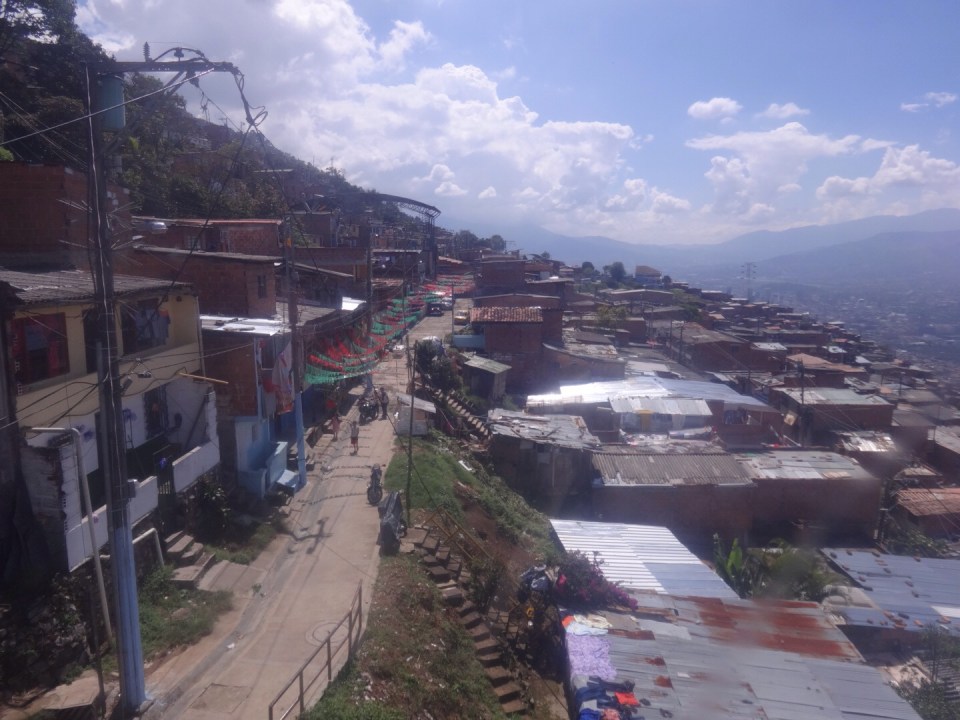
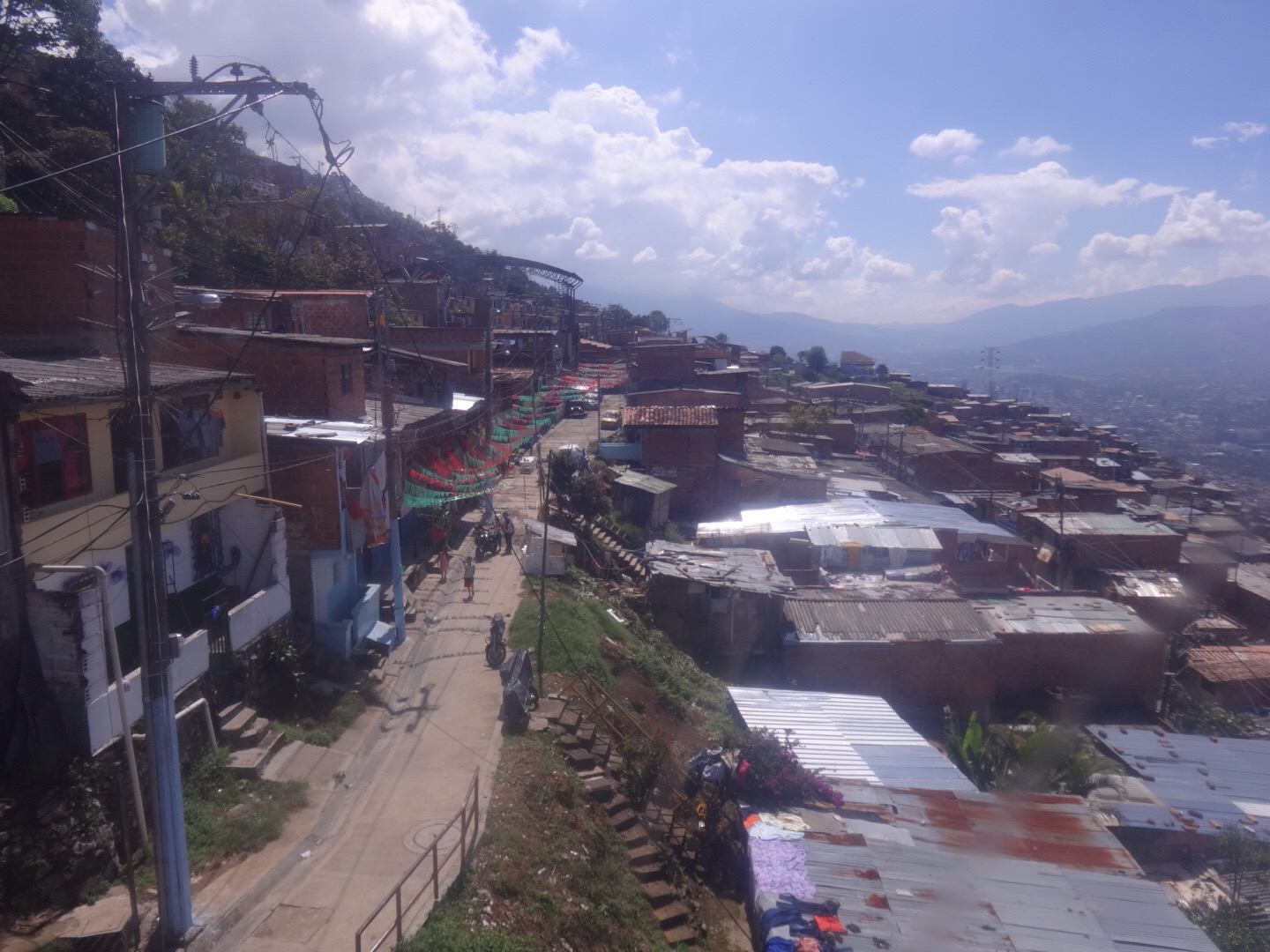
So, to running! Many people had recommended going up to Parque Arvi, a park above the city accessed by a cable car. The definition of park in Latin American seems to be more flexible than in English: I have seen it used for traffic islands with flowerbeds on them; paved urban squares; areas of jungle and wild beach; and city parks which might fit our standard definition. So I wasn’t sure what to expect for Parque Arvi! The cable car ride up there took us over some of the poorest favela-style areas of the city, which before the cable car was built recently, would have been hidden from most travellers and Medellin-dwellers. I am a big fan of city cable cars, a great way to travel and commute in mountainous cities. This one has given access to jobs and opportunities in the city for all those who live in these poorer areas, with a one-price ticket for any journey on the whole metro and cable car system. The second cable car ride took us over the tops of the mountains, over dense jungle, in stark contrast to the bustling urban sprawl below. We were dropped off in what we thought was Parque Arvi and I set off on my run.
The rural roads which cut through the jungle lead me to a path heading into the jungle. It was a lovely place to run, in ways reminiscent of my beloved Chopwell Woods at home in the UK. I wanted to get some snaps of the landscape around but was struggling to find a place clear of trees with a good view. Climbing through a barbed wire fence in search of a good view, I heard voices in my head: indigenous tribes who kill people encroaching on their land; or of the guerrillas and paramilitaries who used to inhabit the mountain jungles, taking hostages or shooting trespassers to protect land which was home to drugs farms. Obvs I was fine and just took some pictures.

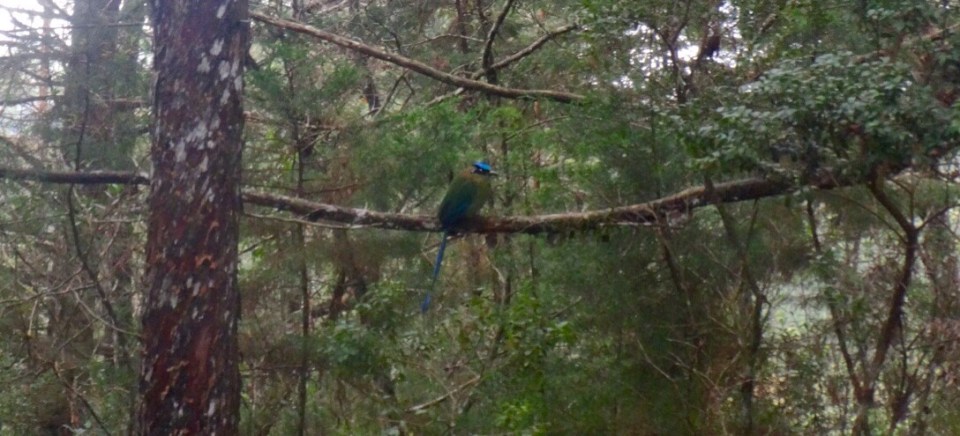
Heading back through the jungle I spotted this cool looking bird who was pretty chilled about me getting close(ish) for a picture.
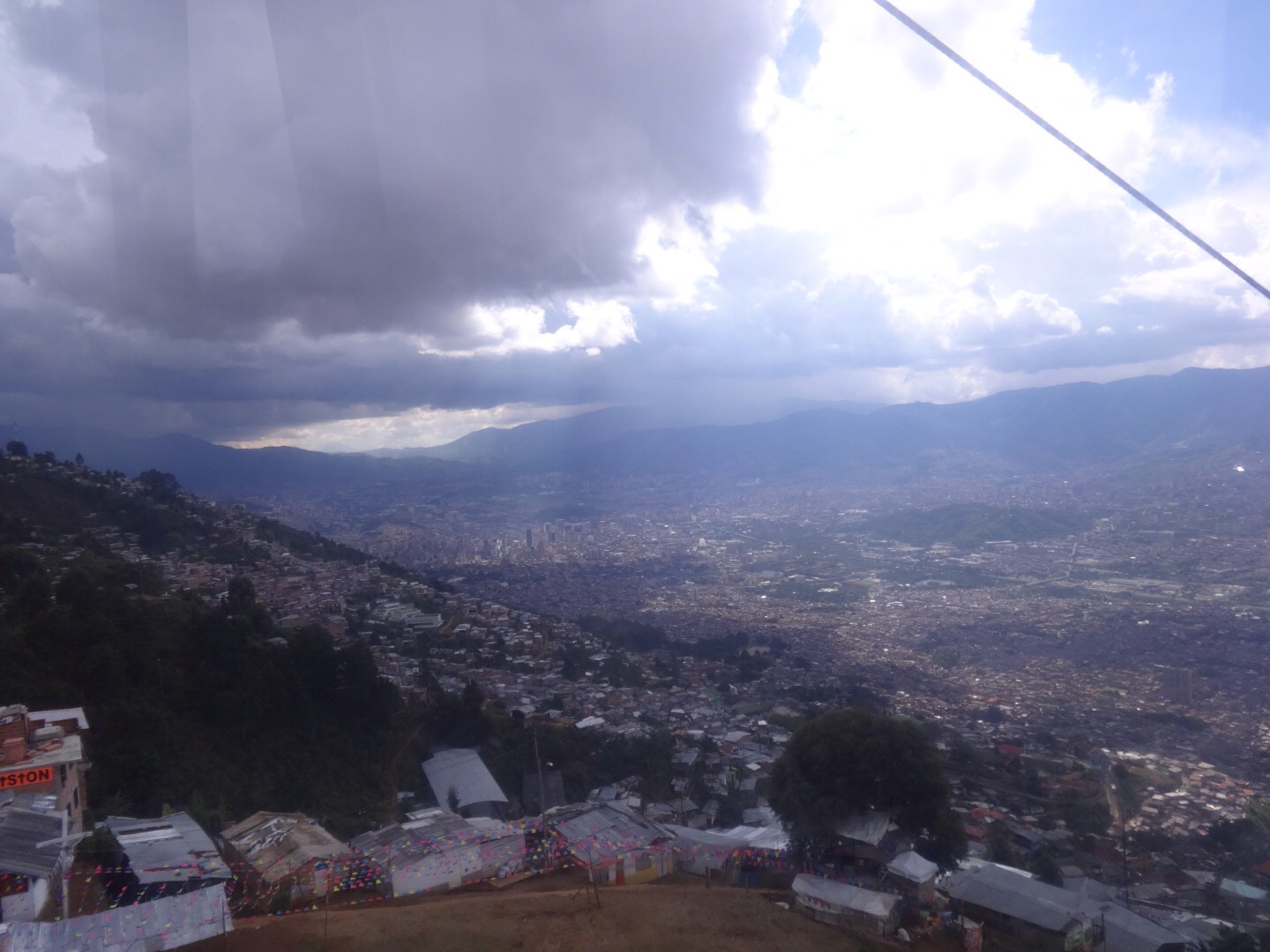
Setting off back through the jungle to the cable car I seemed to be the main attraction for the many Colombians enjoying their bank holiday Monday in the countryside. It had been a tough and hilly run, so I was pretty much bright red. I ran to whoops and cheers, was joined by 4 teenagers running behind me for a little while, was encouraged up the final hill by a chant of ‘un, dos, un, dos…’ and then just generally stared at while I cooled down and slowly faded from red, to pink, to white. After a bowl of tropical berries I climbed on the cable car and headed back into the valley of Medellin, only to see a huge storm blackening the sky of the city to the South, and heading our way.

I later found out that I hadn’t actually made it to Parque Arvi, which is only accessible by tours and busses at the end of the cable car. I had instead run through the jungle which is not recommended to venture into, for some of the reasons mentioned before. I’m not sure if it is at all dangerous these days, I have found that I have been warned away from many places which Colombians themselves travel to frequently, which have been perfectly safe in the end. I have felt safer in Colombia than on many occasions in Manchester, my old UK home. I think the old fears and stigmas are still clinging on, and there is an element of shame from some Colombians, of a history they do not want to remember, and do not want us travellers to learn about. Colombia has come so far in the last 20 years, but like anywhere, still has a little way to go. All I can say is come to Colombia, visit those ‘dodgy’ places, visit those beautiful and incredible places, and help change attitudes and reputations to reflect this beautiful country and its people realistically.




 rosarunningaway